

Agenda
November 10, Tuesday
- 14:00–15:00 CET/CEST
- 13:00–14:00 UTC
Keynote
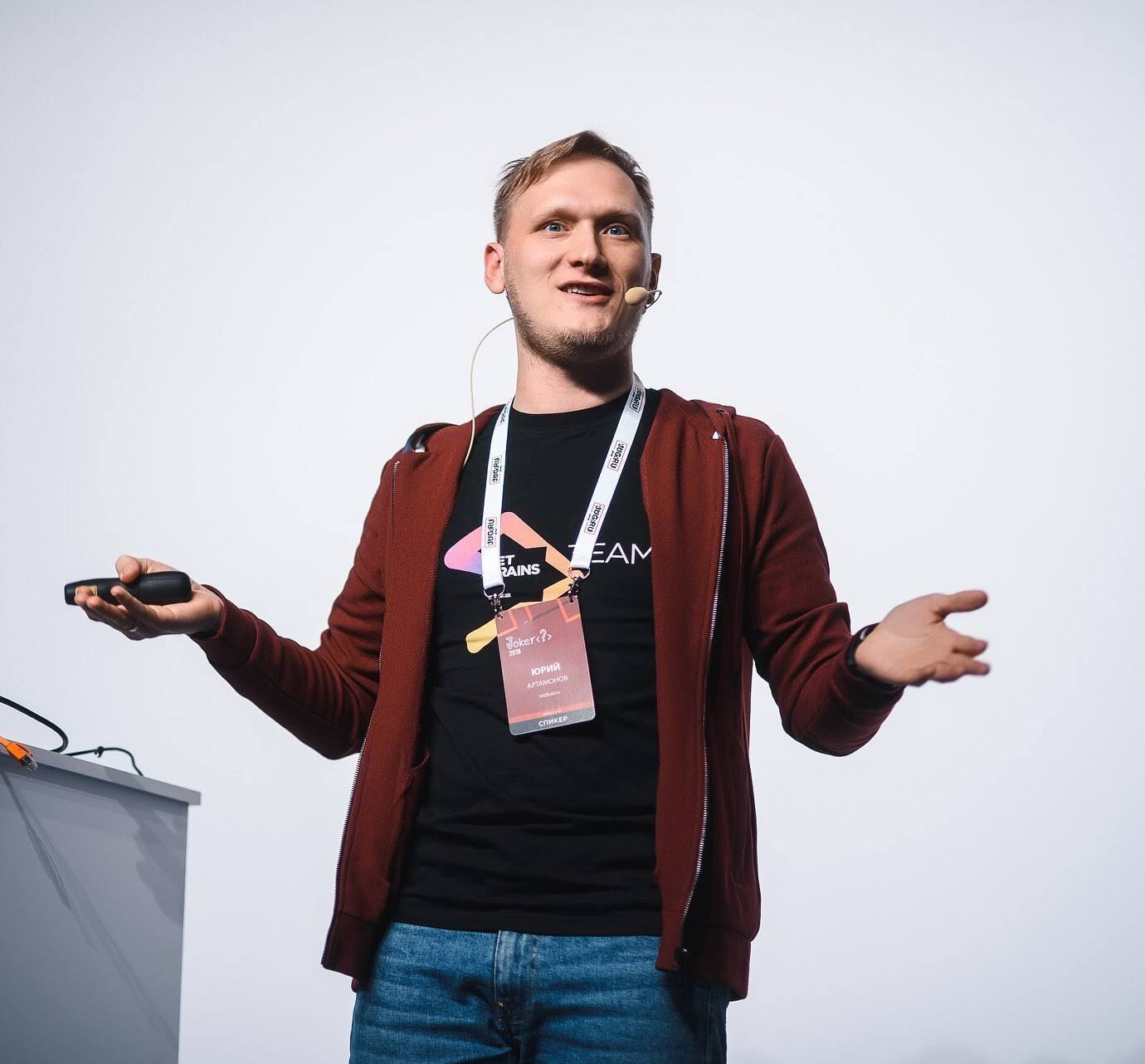
Join Ivan Chirkov, Team Lead for JetBrains Marketplace, as he opens the conference with a look at recent Marketplace developments and future priorities. He’ll be joined by JetBrains experts to cover the latest tools for plugin authors. Jakub Chrzanowski will share updates to the IntelliJ Platform Gradle Plugin and Plugin DevKit, while Róbert Novotný will recap the key improvements to the IntelliJ Plugin Verifier over the past year. Yuriy Artamonov, Product Manager for the IntelliJ Platform, will highlight recent platform developments, new APIs coming in v2026.3, and strategies for tackling common plugin development hurdles like performance issues.
Join Ivan Chirkov, Team Lead for JetBrains Marketplace, as he opens the conference with a look at recent Marketplace developments and future priorities. He’ll be joined by JetBrains experts to cover the latest tools for plugin authors. Jakub Chrzanowski will share updates to the IntelliJ Platform Gradle Plugin and Plugin DevKit, while Róbert Novotný will recap the key improvements to the IntelliJ Plugin Verifier over the past year. Yuriy Artamonov, Product Manager for the IntelliJ Platform, will highlight recent platform developments, new APIs coming in v2026.3, and strategies for tackling common plugin development hurdles like performance issues.
- 15:10–15:40 CET/CEST
- 14:10–14:40 UTC
Dependency Assistant: An IntelliJ Plugin That Started With a Prompt
Born from a desire to expand Spring Data’s dependency-management support to other projects, Dependency Assistant was built with extensive help from AI tools. This session discusses where AI proved useful by exploring unfamiliar APIs, understanding libraries, and reviewing code – and where it created more work and cognitive load than value. Mark will offer practical guidance for retaining control over design, implementation, and code quality.
Born from a desire to expand Spring Data’s dependency-management support to other projects, Dependency Assistant was built with extensive help from AI tools. This session discusses where AI proved useful by exploring unfamiliar APIs, understanding libraries, and reviewing code – and where it created more work and cognitive load than value. Mark will offer practical guidance for retaining control over design, implementation, and code quality.
- 15:50–16:20 CET/CEST
- 14:50–15:20 UTC
Building Language Plugins With the Native LSP API
Bringing a language to JetBrains IDEs may be simpler than you think. This talk explores the IntelliJ Platform’s native LSP API through a case study of a small language plugin, covering what it does in the IDE, how it works file by file, how it gets shipped, and how the same approach can be applied to your own language.
Bringing a language to JetBrains IDEs may be simpler than you think. This talk explores the IntelliJ Platform’s native LSP API through a case study of a small language plugin, covering what it does in the IDE, how it works file by file, how it gets shipped, and how the same approach can be applied to your own language.
- 16:20–16:40 CET/CEST
- 15:20–15:40 UTC
Break
- 16:40–17:10 CET/CEST
- 15:40–16:10 UTC
Integrating a Web-Based Profiler Into IntelliJ IDEA
IntelliJ IDEA’s free feature set lacked a profiler frontend, so Johannes Bechberger built one. Rather than creating everything from scratch, he embedded the existing Firefox Profiler with some custom changes using IntelliJ IDEA’s embedded Chromium browser.
In this talk, Johannes will show how to integrate a web application into an IntelliJ plugin, enable communication between the web UI and the IDE, and make the experience feel properly integrated. He’ll also share lessons learned along the way, including challenges such as Linux-specific issues and increased memory usage.
- 17:20–17:50 CET/CEST
- 16:20–16:50 UTC
Your Plugin's Second Service: Architecture for Integrations That Grow
When a plugin needs a second service, there's a choice: start from scratch, or make one codebase serve both. This session follows a code review plugin as it grows into four plugins supporting five services from a single codebase, including layering that keeps integration logic testable, extension points per service, and releasing them all. It ends with a tour of the MCP API, which offers your plugin's tools to an AI agent through the IDE's built-in MCP server.
When a plugin needs a second service, there's a choice: start from scratch, or make one codebase serve both. This session follows a code review plugin as it grows into four plugins supporting five services from a single codebase, including layering that keeps integration logic testable, extension points per service, and releasing them all. It ends with a tour of the MCP API, which offers your plugin's tools to an AI agent through the IDE's built-in MCP server.
- 18:00–18:30 CET/CEST
- 17:00–17:30 UTC
EelApi: Developing Plugins for Every Project Environment
The IntelliJ Platform has taken a long road toward seamless support for WSL and dev containers. Along the way, we built IJent, a small RPC agent that can outperform WSL’s built-in 9P file access for IDE workloads. Our drive for fast, seamless dev container support then led to EelApi, which helps plugins work across all project environments supported by the platform. The talk shows how EelApi helps plugins follow their users across local, WSL, and dev container projects, with DevKit guidance and practical examples.
The IntelliJ Platform has taken a long road toward seamless support for WSL and dev containers. Along the way, we built IJent, a small RPC agent that can outperform WSL’s built-in 9P file access for IDE workloads. Our drive for fast, seamless dev container support then led to EelApi, which helps plugins work across all project environments supported by the platform. The talk shows how EelApi helps plugins follow their users across local, WSL, and dev container projects, with DevKit guidance and practical examples.
- 18:40–18:50 CET/CEST
- 17:40–17:50 UTC
Closing remarks
Speakers

Ivan Chirkov

Jakub Chrzanowski

Robert Novotny

Johannes Bechberger
Yuriy Artamonov

Alexander Koshevoy
, JetBrains

Mark Paluch

Vladimir Logachev

Evgeny Kudelevsky
FAQ
Is JetBrains Plugin Developer Conf 2026 free to attend?
Yes, JetBrains Plugin Developer Conf 2026 is completely free.
What do I need in order to join the sessions?
We’ll be using YouTube as our streaming platform, so all you’ll need is a device that can stream videos from YouTube. You’re welcome to tune in live or watch the talks later.
Will the sessions be recorded?
Upon registration, you'll receive a link for the event. You can join the stream at any time or watch the recording afterward using the same link. Recordings of individual sessions will be posted on the JetBrains YouTube channel within a few weeks of the conference’s conclusion.
Do I have to attend all of the sessions?
Upon registration, you’ll receive a link for the event. You can join the stream at any time. You’re welcome to pick specific presentations or join us for all of them. We’ll send you email reminders for all of the sessions you register for.
Can I ask questions during the event?
Yes! We encourage you to ask questions in the YouTube chat during the presentations. We’ll try to answer them as we go along.